
The Modern Obituary
Authentic Storytelling in an Age of Algorithms, AI, and Attention
When a Life Story Meets the Internet
Not long ago, an obituary existed primarily in a local newspaper. A family gathered around a kitchen table. Details were shared. Memories were exchanged. A carefully written tribute appeared in print. Friends clipped it from the paper. Neighbors attended the services. The obituary fulfilled its purpose. Today, that same obituary lives in a dramatically different environment.
It exists on funeral home websites, Google search results, Facebook feeds, Instagram posts, AI-powered search engines, memorial websites, online newspapers, and countless third-party platforms. It competes with viral videos, breaking news, advertisements, political debates, celebrity gossip, and an endless stream of content, all fighting for the same thing:
Attention. For funeral homes and families alike, this presents both extraordinary opportunities and uncomfortable realities.
The modern obituary must remain authentic, sincere, and meaningful while simultaneously navigating the increasingly complex world of search engine optimization (SEO), social media algorithms, artificial intelligence, and digital content distribution.
The challenge is preserving humanity while embracing technology.
The Original Purpose of an Obituary
At its core, an obituary serves three essential purposes:
- To announce a death.
- To celebrate a life.
- To invite community participation in remembrance.
Everything else is secondary. The best obituaries are not merely collections of dates and surviving relatives. They tell a story.
They reveal personality. They explain what mattered. They answer questions future generations may someday ask: "Who was this person?" "What made them unique?" "How did they impact others?" A meaningful obituary transforms a name and a date into a legacy. No algorithm can replace that.
The Attention Economy Has Changed Everything
The internet rewards engagement. Google rewards relevance. Social media rewards interaction. AI rewards structured information. Unfortunately, none of these systems is designed specifically for grief, remembrance, or human connection.
The same algorithms that determine whether someone sees a recipe, a sports score, or a vacation advertisement often decide whether friends and family see an obituary. This creates an unusual reality for funeral homes. A beautifully written obituary that receives little visibility may fail to reach distant relatives, former coworkers, military comrades, classmates, church members, or friends who otherwise would have attended services. Meanwhile, a thoughtfully optimized obituary may reach thousands of people who genuinely want to know. In other words, visibility matters. Not for vanity. Not for clicks. Not for marketing. But because attendance matters. Community matters. Presence matters. A funeral service remains one of the few remaining in-person social moments that brings generations together around a shared experience. When an obituary reaches more people, more people have the opportunity to participate in a family's history.
The SEO Reality Most Families Never See
Behind every modern obituary is an invisible layer of technology. Google's search engine attempts to understand:
- Who the deceased was
- Where they lived
- Community affiliations
- Military service
- Career history
- Family relationships
- Organizations mentioned
- Places referenced
- Dates and events
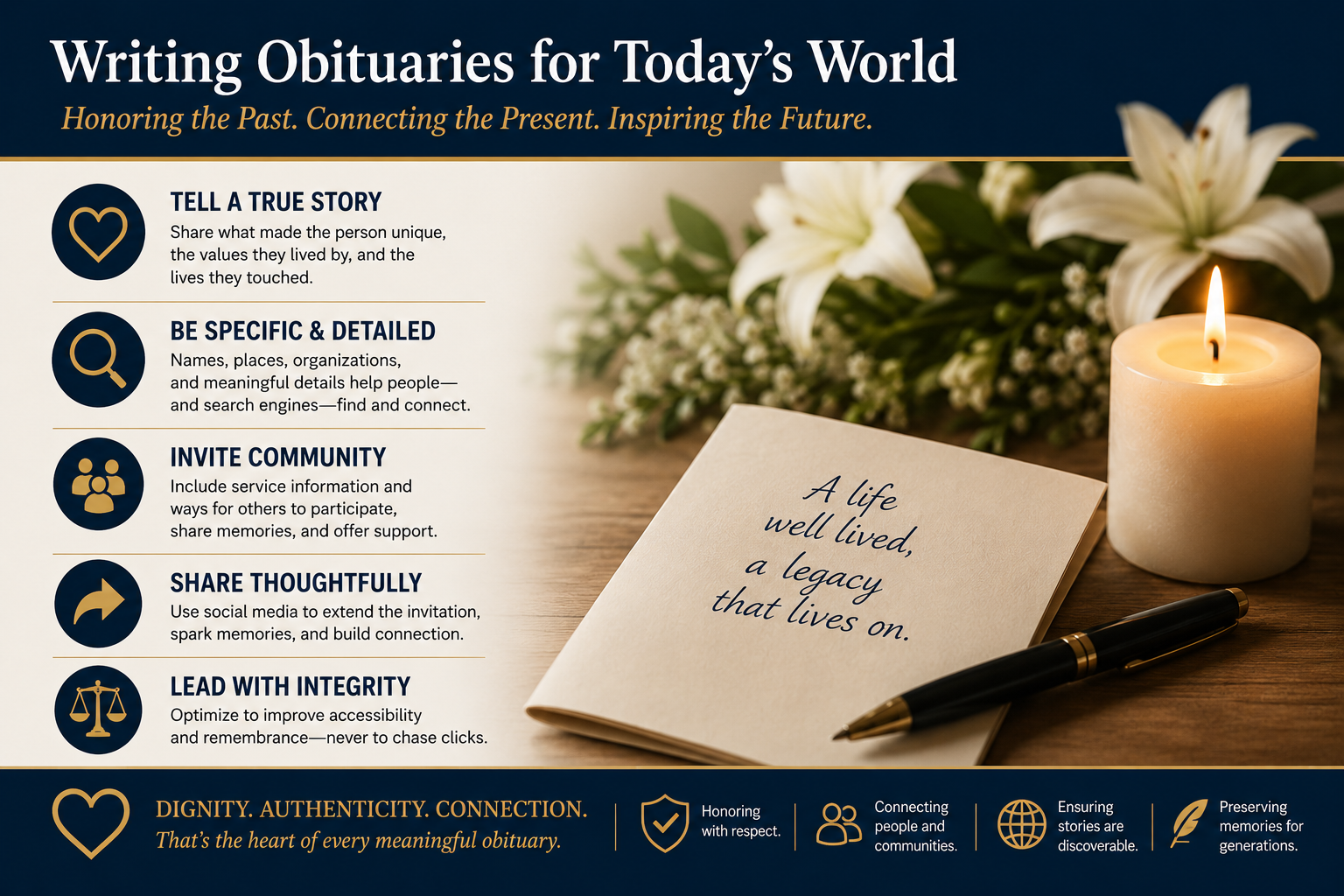
The more context provided, the more effectively search engines can understand and display the obituary. This is why details matter. Instead of: "John enjoyed fishing." Consider: "John spent countless weekends fishing the Delaware River and coaching youth baseball throughout Camden County." Specificity creates meaning for readers while simultaneously helping search engines understand context. The remarkable truth is that what makes an obituary more human often makes it more discoverable as well. Rich stories outperform generic summaries. Authenticity frequently aligns with SEO best practices.
The Social Media Puzzle
Social media introduces a different challenge. Facebook, Instagram, LinkedIn, and other platforms prioritize content that generates engagement. Comments. Shares. Reactions. Conversations. For funeral homes, this can feel uncomfortable. Grief should never become a marketing tactic. Yet sharing an obituary on social media often creates tremendous value. Former classmates reconnect. Military friends reunite. Distant family members learn of services. Stories emerge that the family never knew. Photographs surface. Memories are preserved. The objective should never be to "go viral." The objective should be to create opportunities for meaningful community engagement. Those are very different goals. The most successful obituary posts focus on storytelling, remembrance, and invitation rather than sensationalism.
The Fine Line Between Optimization and Exploitation
Every funeral home faces an important ethical question: How far should optimization go? There is a significant difference between helping people find an obituary and manipulating emotions for attention. Families deserve dignity. The deceased deserve respect. The funeral profession occupies a unique position of trust. This means every SEO decision should be guided by a simple principle: Does this improve accessibility and remembrance? Or does it simply chase clicks? The answer matters. A compelling headline may increase visibility. Clickbait diminishes trust. Thoughtful storytelling builds community. Sensationalism undermines it. The distinction is critical.
AI Is Reshaping Obituaries
Artificial intelligence has already begun transforming how obituary content is created, distributed, discovered, and summarized.
AI tools can help funeral directors:
- Improve grammar
- Organize information
- Generate drafts
- Create summaries
- Suggest headlines
- Identify missing details
Used appropriately, these tools can save time and improve consistency. However, AI cannot replace genuine memory. It cannot understand family dynamics. It cannot fully capture personality. It cannot recreate a lifetime of relationships. The best results occur when AI assists human storytellers rather than replacing them. Families know life. Funeral directors understand remembrance. AI should support that process—not define it.
The Growing Concern of Content Scraping
One of the least discussed realities of modern obituary publishing involves content scraping. Many families are surprised to discover that obituary content may appear on numerous third-party websites shortly after publication. Some sites automatically collect obituary information from funeral home websites. Others aggregate memorial content into massive databases. Some generate traffic through search engines. Others monetize memorial gift sales, flowers, keepsakes, advertisements, or lead generation opportunities. While some provide legitimate value, others contribute little while benefiting financially from content originally created by funeral homes and families. The rise of AI introduces additional concerns. Large language models increasingly consume publicly available web content to generate summaries, answer questions, and build informational databases. As a result, obituary content now exists in a much broader digital ecosystem than ever before. Families should understand that publishing online increases visibility but may also increase distribution beyond the funeral home's direct control.
Writing Obituaries That Perform Well Online Without Losing Their Soul
The strongest modern obituaries tend to share several characteristics.
They Tell Stories
Facts inform. Stories connect. The most memorable obituaries include moments that reveal character, humor, passion, resilience, generosity, or love.
They Include Specific Details
Specificity benefits readers and search engines alike.
- Communities.
- Organizations.
- Schools.
- Military service.
- Careers.
- Hobbies.
- Volunteer activities.
- Faith communities.
These details create context and improve discoverability.
They Include Complete Service Information
Search engines and readers both need clarity.
- Dates.
- Times.
- Locations.
- Visitation information.
- Memorial contribution instructions.
Clear information reduces confusion and increases attendance.
They Are Written for Humans First
Google's algorithms continue evolving. Social media algorithms change constantly. AI systems are rapidly developing. Human connection remains unchanged. An obituary should first serve the family. Technology comes second.
The Future of the Modern Obituary
The obituary is no longer confined to a newspaper page. It has become a digital archive, a social announcement, a search result, a community gathering point, and increasingly, a historical record consumed by both people and machines. The technology will continue changing. Algorithms will evolve. Platforms will rise and fall. AI will become more sophisticated. Yet the purpose remains remarkably constant. To remember. To honor. To gather. To tell the story of a life that mattered.
The funeral profession now stands at the intersection of tradition and technology. The challenge is not choosing between authenticity and optimization. The challenge is ensuring that optimization serves authenticity. Because the best obituary is not the one that receives the most clicks. It is the one that helps the right people find the right story at the right moment—and inspires them to come together, remember, and celebrate a life well lived.
At McGee Celebration, we believe every obituary should do more than announce a death. It should preserve a legacy, connect communities, and tell the story of a unique life with dignity, authenticity, and purpose. As technology continues to evolve, our commitment remains the same: helping families create meaningful tributes that honor the people they love while ensuring those stories are seen, shared, and remembered.