
Safety in the Midst of Loss
How Funeral Service Creates Space for Trust, Clarity, and Expression

When loss enters a family, it rarely arrives quietly. It disrupts rhythm, fractures certainty, and places people into a state of emotional and practical vulnerability almost instantly. In that moment, safety becomes more than a physical condition—it becomes emotional, financial, and psychological. It becomes the foundation upon which every decision, every conversation, and every ritual must stand.
Funeral service, at its best, is designed to provide exactly that: a structured environment where people can feel held, guided, and protected while navigating one of life’s most disorienting experiences.
The Quiet Trust in a Compassionate Stranger
There is something uniquely complex about the relationship between a family and a funeral director. Within hours—sometimes minutes—of meeting, families are asked to place immense trust in someone they’ve never known before.
And yet, they do.
Not because of obligation, but because of presence.
Safety begins in the subtle signals:
A steady voice in a chaotic moment
Clear, confident guidance without pressure
The ability to listen without interruption or an agenda
Much of what creates that feeling happens “behind the scenes.” Families don’t see the dozens of coordinated steps, the compliance requirements, the logistical precision. What they feel instead is order emerging from disorder. That feeling—of things being handled, of details being managed—is what allows them to exhale, often for the first time since the loss occurred.
That exhale is safety.
Safety in the Face of Financial Shock
Death doesn’t pause financial reality. In fact, it often intensifies it.
Families are suddenly confronted with decisions that carry both emotional and financial weight:
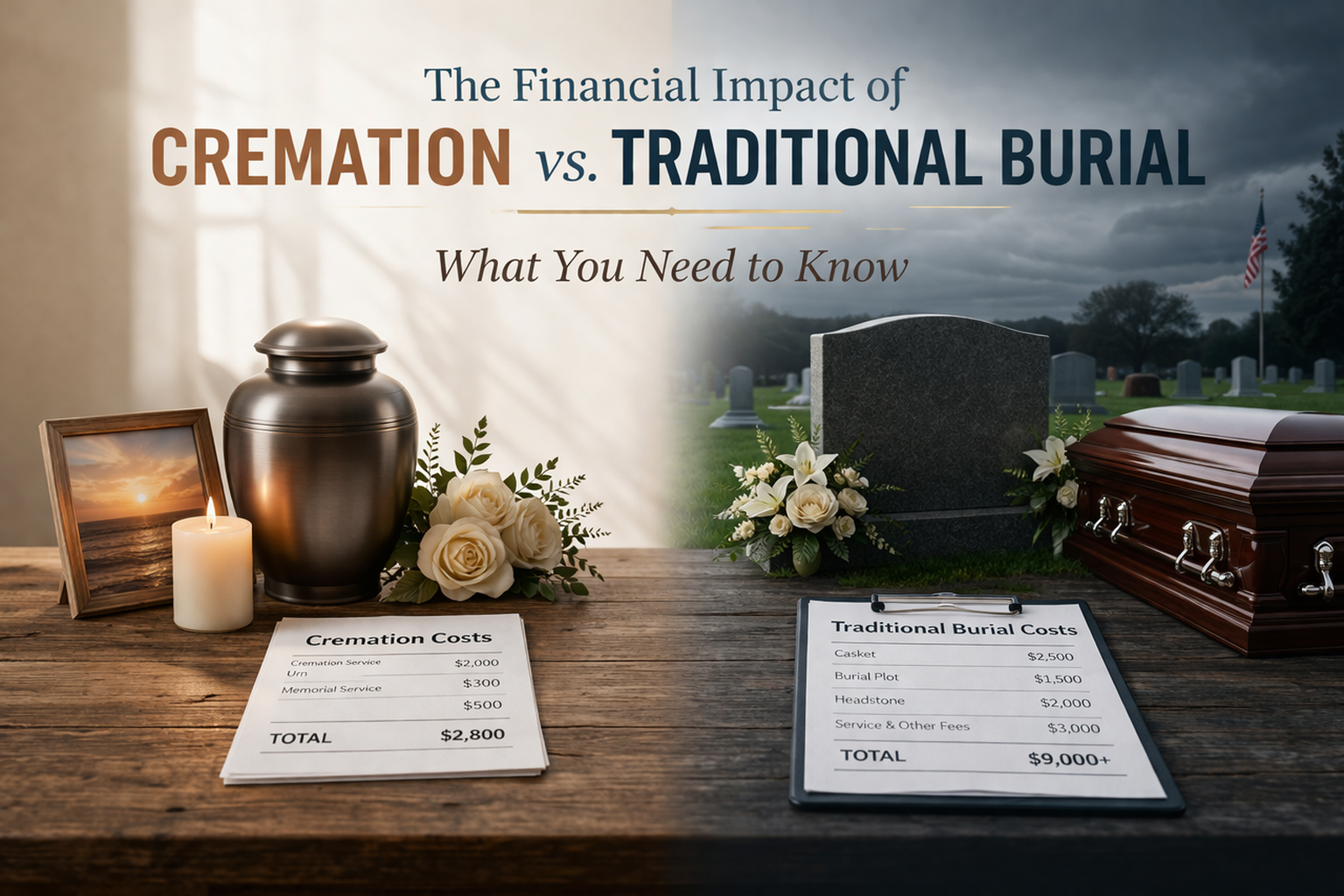
Burial vs. cremation
Immediate services vs. delayed gatherings
Merchandise, transportation, and third-party costs
Without guidance, this moment can trigger knee-jerk reactions—decisions made from fear, urgency, or guilt rather than clarity.
A well-structured funeral experience creates financial safety by:
Providing transparency in pricing and options
Separating emotional decisions from financial ones
Allowing time and space to think, rather than react
Safety here is not about minimizing cost—it’s about removing confusion. When families understand what they’re choosing and why, they regain a sense of control. And control, in moments of loss, is a powerful stabilizer.
Ritual as a Framework for Emotional Safety
Grief is often described through the lens of the five stages: denial, anger, bargaining, depression, and acceptance. While not linear, these stages offer a recognizable emotional landscape.
Ritual and ceremony provide structure within that landscape.
A visitation, a service, a moment of final farewell—these are not just traditions. They are controlled environments where grief is permitted, expressed, and witnessed.
In these spaces:
Denial softens as reality is acknowledged
Anger finds a voice without judgment
Bargaining gives way to shared remembrance
Depression is met with community presence
Acceptance begins, however quietly
There is a profound safety in being able to publicly feel what is privately overwhelming. Ceremony gives permission. It transforms internal emotion into external expression.
And in doing so, it reduces isolation.
The Power of Saying Goodbye—Out Loud
One of the most underestimated aspects of funeral service is the act of intentional goodbye.
Not implied. Not assumed. Spoken, witnessed, and felt.
Whether the relationship was loving, complicated, unresolved, or even strained—there is safety in acknowledging it fully. Funeral service creates a rare opportunity:
To say what was never said
To forgive or seek forgiveness
To express gratitude, anger, or love without interruption
This is not about perfection. It’s about completion.
When people are given the space to externalize their emotions—good, bad, or indifferent—they often leave with something unexpected: relief.
Not from the loss, but from the weight of what remained unexpressed.
Time as a Protective Element
In a world that moves quickly, funeral service intentionally slows things down.
Time inside a funeral home is different. It is structured, but not rushed. Guided, but not forced.
That time allows for:
Thoughtful decision-making
Emotional processing
Family alignment and communication
A skilled funeral director acts as both coordinator and interpreter—translating logistics into meaning, and emotion into action. They choreograph not just events, but experiences:
The flow of a service
The tone of a room
The balance between solemnity and celebration
This orchestration creates a container where vulnerability is not only safe—it is expected.
Safety as the Foundation of Healing
At its core, safety in funeral service is about creating conditions where people can function, feel, and ultimately begin to heal.
It is:
The calm voice in a moment of shock
The clear explanation in a moment of confusion
The structured ritual in a moment of emotional chaos
The permission to grieve openly, without apology
And perhaps most importantly, it is the assurance that nothing about this experience has to be navigated alone.
Because when people feel safe—truly safe—they are able to do something incredibly difficult:
They are able to say goodbye.